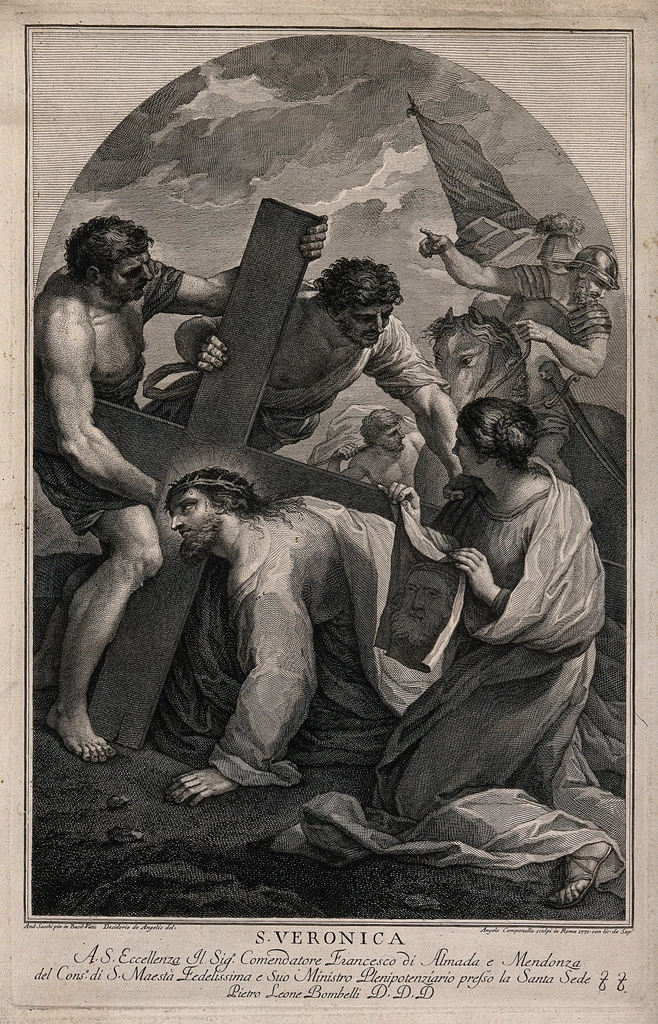
To Embrace the Cross (Even the Small Ones)
There’s a striking image found in traditional Catholic devotion: Jesus, on the way to His crucifixion, not recoiling from the Cross, but embracing it. In some meditations, He even kisses it — not because He enjoys suffering, but because He knows what it will become: a doorway to redemption.
That kind of love — the kind that doesn’t just accept the Cross but embraces it — is hard to wrap your head around. Especially when most of our own crosses are less dramatic and more just… annoying.
And yet, we’re invited into the same posture. Not necessarily toward martyrdom, but toward daily discomfort. Toward choosing love in moments when everything in us would rather escape.
The Saints Who Didn’t Run from the Cross
A Love That Didn’t Flinch
From the early Church to modern saints, the Cross isn’t just something Christ carried — it’s something His followers picked up too. And not just because they had no choice. For many of them, it was embraced freely — as a way to grow closer to Jesus.
St. Francis of Assisi is a striking example. In one of the most well-loved stories from The Little Flowers, he walks for miles in the cold with Brother Leo, reflecting on what “perfect joy” really means. He imagines scenario after scenario — working miracles, speaking every language, converting every soul — and insists that none of these, impressive as they are, would qualify.
Perfect joy, he says, would come only if they were rejected at their own monastery, insulted, beaten, thrown into the snow — and accepted it all with patience, humility, and love. Not because it felt good. Not because it was fair. But because it allowed them to unite their suffering to Christ’s.
“Above all gifts of the Holy Spirit that Christ Jesus gives to His friends,” Francis says,
“is the grace to overcome oneself, to accept willingly, out of love for Him,
all contempt, all discomfort, all injury, and all suffering.”
That is not a natural instinct. That’s grace.
St. John of the Cross, centuries later, would echo the same truth. His famous Dark Night of the Soul wasn’t a celebration of pain — it was a roadmap for those who continue on the path of love even when the lights go out. Even when God feels silent.
St. Thérèse of Lisieux picked up that same Cross in the quiet of her convent. Her “little way” of doing small things with great love became a way of sanctifying the unseen.
“To pick up a pin for love,” she said, “can convert a soul.”
And St. Gianna Molla, a mother and physician, carried her cross in the form of sacrifice for her unborn child. She didn’t seek out suffering. But when the moment came, she chose love over self-protection.
These saints didn’t love the Cross because it was dramatic. They loved it because it was Christ’s. And because in carrying it — quietly, patiently, sometimes invisibly — they found union with Him.
Kissing the Cross (Even When It’s Not Noble or Dramatic)
We tend to think of “carrying our cross” in terms of tragedy — something big, visible, and dramatic. But most of us are handed smaller ones: the kinds that don’t make for conversion stories, but that still call something deep out of us.
- When someone checks their phone in the middle of a conversation
- When you’re cut off in traffic
- When the baby won’t sleep and you’re on hour four of a long night
- When you clean the house and no one notices — or worse, they ask what you did all day
None of these are crises. But they aren’t meaningless either.
These are the moments where love is tested — and proven.
They’re the places where we decide, quietly, to show up again.
To stay present. To stay kind. To stay faithful.
“Love bears all things, believes all things, hopes all things, endures all things.”
(1 Corinthians 13:7)
We can’t always avoid these things. But we can choose how we carry them.
We can drag them behind us with resentment — or we can offer them with love.
And sometimes — quietly, maybe even with a bit of humor — we can embrace them.
Take St. Lawrence, a Roman deacon who was roasted alive for refusing to surrender the Church’s treasures. While being martyred, he’s famously said:
“Turn me over, I’m done on this side.”
Not exactly the line you’d expect in the middle of torture. But it reflects the odd, unsettling joy that comes when suffering is united with Christ. It’s not masochism. It’s a refusal to let pain have the final word.
The World Says “Escape.” The Gospel Says “Offer.”
Modern life doesn’t really make room for suffering. It markets itself as a kind of salvation from discomfort — a steady hum of upgrades, conveniences, and curated experiences.
Don’t feel well? There’s a pill.
Feeling sad? Distract yourself.
Stressed or overwhelmed? Escape. Treat yourself. Cut ties. Redefine the problem until it no longer bothers you.
Tired of someone’s demands? Set a boundary — not for their good, but to secure your comfort.
None of those things are wrong in themselves. Good boundaries matter. Medical help matters. Rest matters.
But when the goal becomes zero friction, when any kind of discomfort is labeled as toxic, when sacrifice is seen as self-harm — something crucial is lost.
In that world, the Cross becomes unintelligible. It’s not just hard — it’s offensive.
Because embracing the Cross means choosing to stay when it’s easier to leave.
It means loving people who aren’t always grateful.
It means serving when no one sees, forgiving when no one apologizes, and hoping when you’ve been disappointed before.
The Gospel doesn’t glamorize suffering. But it gives it meaning.
Jesus doesn’t say, “Endure a little so you can get what you want later.”
He says:
“Then he said to all, ‘If anyone wishes to come after me, he must deny himself and take up his cross daily and follow me.’”
(Luke 9:23, NABRE)
Daily.
Not once.
Not dramatically.
Just faithfully.
The world offers quick exits. Jesus offers a better way: offering it up, not giving up.
He doesn’t ask us to enjoy suffering. He asks us to join Him in it — to trust that it’s not wasted, and that love can be found even in what we’d rather avoid.
A Final Word: Carrying What We Can’t Control
We’re not called to chase suffering. But we are called to carry it — when it comes — with love.
“Not only that, but we even boast of our afflictions, knowing that affliction produces endurance, and endurance, proven character, and proven character, hope.”
(Romans 5:3–4, NABRE)
That hope isn’t naive. It’s forged in the hidden places — in the ordinary struggles no one else sees, and in the Cross that Christ embraced before we ever would.
You don’t have to find meaning in every frustration. But you can offer it.
You can choose to carry it differently.
Not because it will impress anyone.
Not because it feels profound.
But because Jesus is there — in the middle of it.
And because He didn’t just carry His Cross.
He welcomed it.
And He walks with us as we carry ours.


You May Also Like

Jesus in the Home: The Nazareth Years We Overlook

The Traditional Latin Mass — A Gift to Love, Not a Line to Draw
