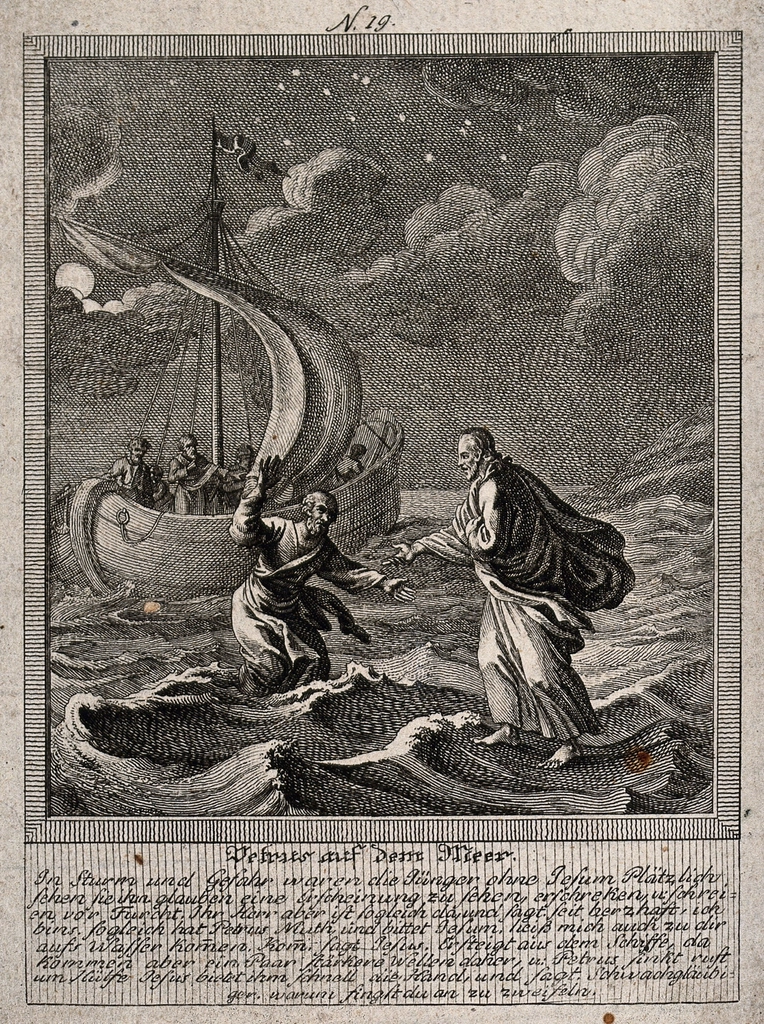
Fear Is Not the Gospel
Spend five minutes on YouTube or scrolling social media, and you will find it.
“The Church isn’t telling you this.”
“You need to hear this before it’s too late.”
“Only a few understand what’s coming.”
“If you’re not prepared, you could lose everything.”
It is presented as vigilance.
It sounds urgent.
It often calls itself faithful.
But listen closely and you will notice something beneath it: fear.
Not reverence.
Not sober readiness.
Fear.
And when fear is wrapped in Christian language, it spreads quickly.
The Business of Anxiety
There is a spiritual industry that thrives on escalation.
Each message must be more urgent than the last.
Each warning must feel more exclusive, more immediate, more secret.
Because urgency keeps attention.
Anxiety keeps people watching.
And attention builds platforms.
When Christian voices rely on that pattern to sustain themselves, something is out of alignment.
If you are going to speak in the name of Christ, the tone of Christ matters.
And He said—again and again—“Be not afraid.”
What the Apostles Sound Like
After Pentecost, the Apostles did not sound frantic.
They did not sound like men scrambling for insider knowledge.
They preached Christ crucified and risen.
They were imprisoned.
They were beaten.
They were threatened.
They were killed.
And yet they did not panic.
Not because they felt nothing—but because fear did not govern them.
St. Paul writes, with startling calm:
“For to me life is Christ, and death is gain.”
That is not bravado.
It is not denial.
It is the logic of the Resurrection.
If death itself has been conquered, what leverage does fear ultimately have?
A Necessary Question
If you are going to call yourself a Christian voice…
If you are going to speak under the banner of the Gospel…
Who are you to sell fear?
Christ did not build His Church on anxiety.
He did not form His disciples through suspense.
He formed them through trust.
The saints were not fearless in the sense of feeling nothing. Many trembled. Many wrestled. Many faced real dread. But they did not let fear become their master. Their eyes were fixed elsewhere.
Grace steadied them.
Humility grounded them.
Love reoriented them.
They kept their eyes on Christ—and fear lost its authority.
The Church’s Answer
The Church does not deny the Book of Revelation.
She does not deny judgment.
She does not deny tribulation.
She does not deny the possibility of dark days.
She simply refuses to panic.
Her answer has always been the same:
Live ready.
And in the Gospel, readiness does not look like fear.
It looks like love.
If the End Were Truly Near
If we truly believed the end were imminent, our urgency would look different.
It would not be endless sharing of warnings.
It would be love of neighbor made visible.
It would be inviting the one who has drifted back to Mass.
It would be speaking the name of Jesus without embarrassment.
It would be confession sought without delay.
It would be forgiveness extended quickly.
It would be courage, not commentary.
The Apostles believed the Lord could return in their lifetime.
They did not form a media strategy.
They preached Christ.
If we are going to speak of the end, let it sharpen our charity.
Let it deepen our fidelity.
Let it make us bold in love.
If It Leaves You Smaller
If the content you consume leaves you
more anxious than anchored,
more suspicious than trusting,
more obsessed with events than with Christ,
more fearful of the future than confident in the Resurrection,
it is worth asking whether it is forming you in the Gospel—or in something else.
The Gospel produces courage.
Not because nothing bad will happen.
But because the worst thing has already been conquered.
The end of the world is not a twist in the story.
It is the fulfillment of it.
It is not the moment we lose.
It is the moment we see Him—
and in His presence every anxious fear falls away.


You May Also Like

Why Safe Isn’t Always Holy — Obedience, Conscience, and the Saints Who Loved the Church

Martha Became a Saint Too
